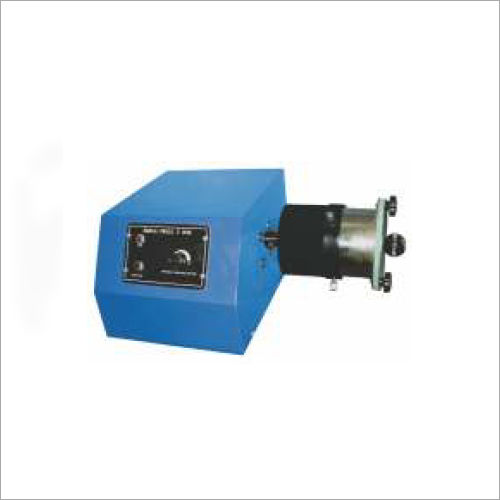
BSE-0113 Ball Mill (Laboratory Type) About
Specification
| Cat. No | Capacity | Motor Capacity | Aluminium Jar | S.S Jar |
| BSE-113(A) | 1 kg jar | 1/2 H.P | 13090.00 | 13970.00 |
| BSE-113(B) | 2 kg Jar | 1/2 H.P | 13970.00 | 17930.00 |
| BSE-113(C) | 5 kg Jar | 1/2 H.P | 29040.00 | 36960.00 |
Purpose and VersatilityDesigned for both grinding and mixing applications, the BSE-0113 Ball Mill is suitable for handling a wide variety of dry and wet laboratory samples. Its adjustable jar options and porcelain grinding media make it highly effective for experimental protocols and sample preparation across research and industrial laboratories.
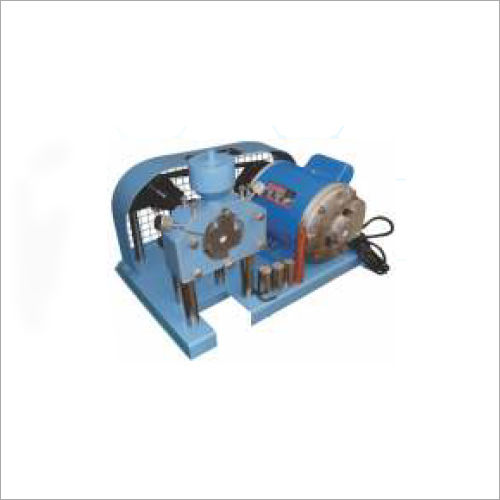
Reliable Performance and ConstructionThis ball mill features a solid V-belt driven mechanism and a robust mild steel frame, ensuring durability and steady performance. The low-noise operation and benchtop design provide convenience and comfort for laboratory personnel, while the easy-to-use manual control mode enhances operational flexibility.
User-Centric Design and MaintenanceThe BSE-0113 Ball Mill prioritizes user safety and convenience with its simple structure, painted or powder-coated finish for longevity, and quick cleaning process. Its low-maintenance requirements and accessible design help streamline laboratory workflows, allowing users to focus more on their experiments.
FAQs of BSE-0113 Ball Mill (Laboratory Type):
Q: How does the BSE-0113 Ball Mill facilitate laboratory sample preparation?
A: The BSE-0113 Ball Mill is designed for efficient grinding and mixing of both dry and wet laboratory materials. The porcelain jar and precision-balanced grinding media ensure thorough blending and particle size reduction, making it optimal for preparing homogenous laboratory samples.
Q: What types of laboratory materials can be processed with this ball mill?
A: This unit is versatile and can process a range of samples, including chemicals, minerals, ores, and other solid substances. It is suitable for both dry and wet grinding applications in various research, academic, or industrial labs.
Q: When is it recommended to use the 1 kg versus 2 kg porcelain jar?
A: The choice between the 1 kg and 2 kg porcelain jars depends on your sample size and laboratory throughput requirements. Use the 1 kg jar for smaller batch experiments or when sample quantity is limited, and opt for the 2 kg option when larger scale or higher volume processing is needed.
Q: Where can the BSE-0113 Ball Mill be installed in a laboratory setting?
A: Thanks to its compact, benchtop design, this ball mill can be conveniently placed on any stable workbench or lab counter. Its sturdy mild steel stand offers added safety and stability during operation.
Q: What is the process for operating and cleaning the ball mill?
A: Operation is manual and straightforward: load the sample and grinding media into the jar, secure the jar, set the desired duration, then power the unit on. Cleaning is easysimply remove the jar and grinding media, wash with appropriate solvents, and dry before the next use.
Q: How does its V-belt drive system benefit laboratory users?
A: The V-belt drive mechanism ensures smooth, reliable transmission of power, resulting in consistent speed control at 80 RPM. This not only enhances grinding efficiency but also reduces machine wear and operational noise.
Q: What are the primary advantages of using this ball mill for laboratory applications?
A: The BSE-0113 offers robust construction, low-noise performance, minimal maintenance, and flexible sample handling for both wet and dry operations. Its user-friendly design and reliable results make it an excellent choice for routine laboratory grinding and mixing tasks.










 Send Inquiry
 Send Inquiry
 Send SMS
 Call Me Free